Inlet Connection
Connects the regulator to the upstream gas source.
Pressure regulators
A double-stage gas regulator reduces inlet pressure through two successive regulation stages, helping provide more stable downstream pressure as inlet pressure and gas demand change.
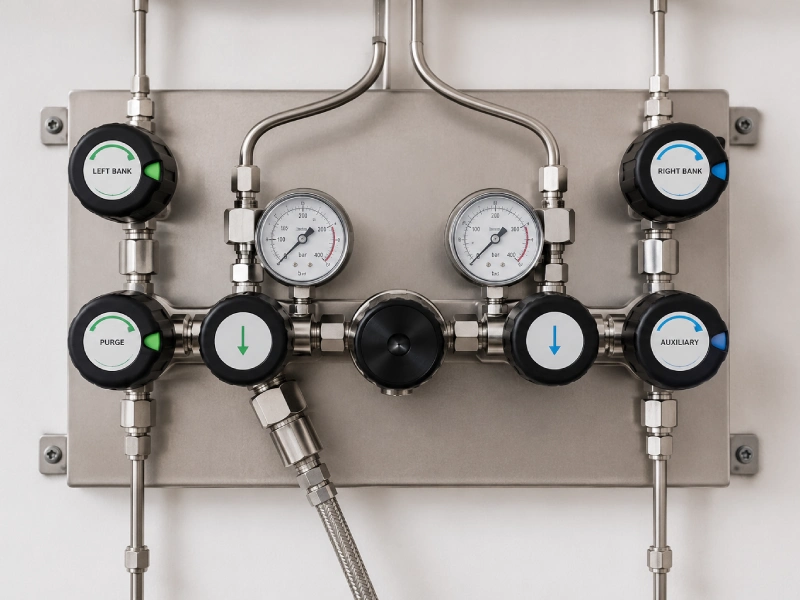
A double-stage gas regulator performs pressure reduction through two successive regulating stages. The first stage reduces the incoming high pressure to an intermediate pressure. The second stage then reduces this intermediate pressure to the required downstream operating pressure.
This two-stage arrangement can reduce the influence of changing inlet pressure on the final outlet pressure, making it useful for applications where consistent downstream pressure is important.
Actual performance depends on regulator design, inlet pressure, outlet setting, gas flow and operating conditions. Identical performance is not claimed for every double-stage regulator.
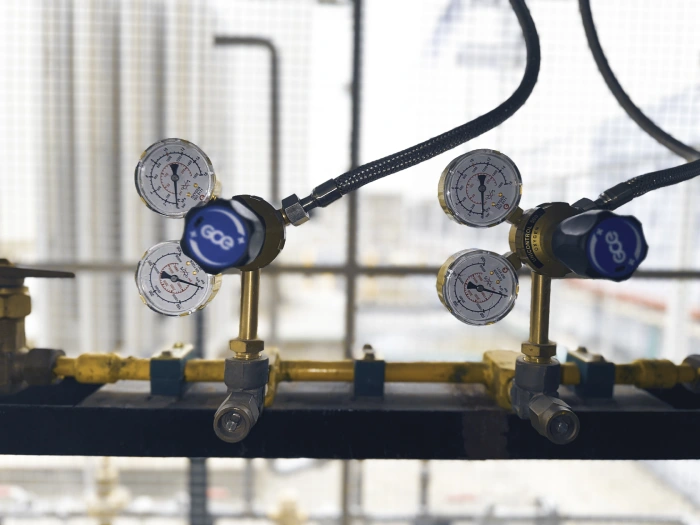
In a double-stage regulator, incoming gas first passes through the primary regulating stage where the high source pressure is reduced to an intermediate pressure. The gas then enters the second regulating stage, where it is reduced again to the required downstream pressure. Dividing pressure reduction across two stages can provide improved pressure stability compared with many single-stage configurations, particularly as source pressure changes.
01
Cylinder, manifold or pipeline upstream of the regulator.
02
The primary stage reduces high source pressure to an intermediate pressure.
03
The controlled condition between the first and second regulating stages.
04
The second stage reduces intermediate pressure to the required outlet condition.
05
Downstream pressure delivered to the next stage of the system.
06
Pipeline, instrumentation, panel, point of use or process equipment.
The functions below are typical of double-stage industrial regulators. Internal geometry, materials and gauge arrangement vary by configuration and manufacturer datasheet. This is not a claim about one specific PES or OEM model.
Connects the regulator to the upstream gas source.
Performs the initial reduction from high source pressure to intermediate pressure.
Provides the controlled pressure condition between the first and second stages.
Provides final pressure reduction to the required outlet condition.
Respond to pressure conditions and control the regulating elements.
Allows outlet pressure to be established according to the regulator configuration.
Connects the regulated gas supply to the downstream system.
Depending on configuration, gauges may indicate inlet, intermediate or outlet pressure.
The appropriate regulator configuration depends on the gas service, inlet pressure, required outlet pressure, flow demand and pressure-stability requirements.
| Feature | Single stage | Double stage |
|---|---|---|
| Pressure reduction | One primary stage | Two successive stages |
| Pressure stability | Suitable for many general applications | Generally better suited where outlet stability is more important |
| Inlet pressure changes | Outlet pressure may be more influenced by changing inlet pressure | Two-stage design can reduce the influence of inlet-pressure variation |
| Construction | Simpler | More complex |
| Typical application | General industrial gas supply | Critical, specialty or demanding pressure-control applications where appropriate |
| Selection | Based on gas, pressure and flow | Based on gas, pressure, flow and pressure-stability requirements |
The appropriate regulator configuration depends on the gas service, inlet pressure, required outlet pressure, flow demand and pressure-stability requirements.
These are typical operating environments. Not every double-stage regulator is suitable for every listed application. Selection follows the gas, pressure, flow, stability and installation conditions of the project.
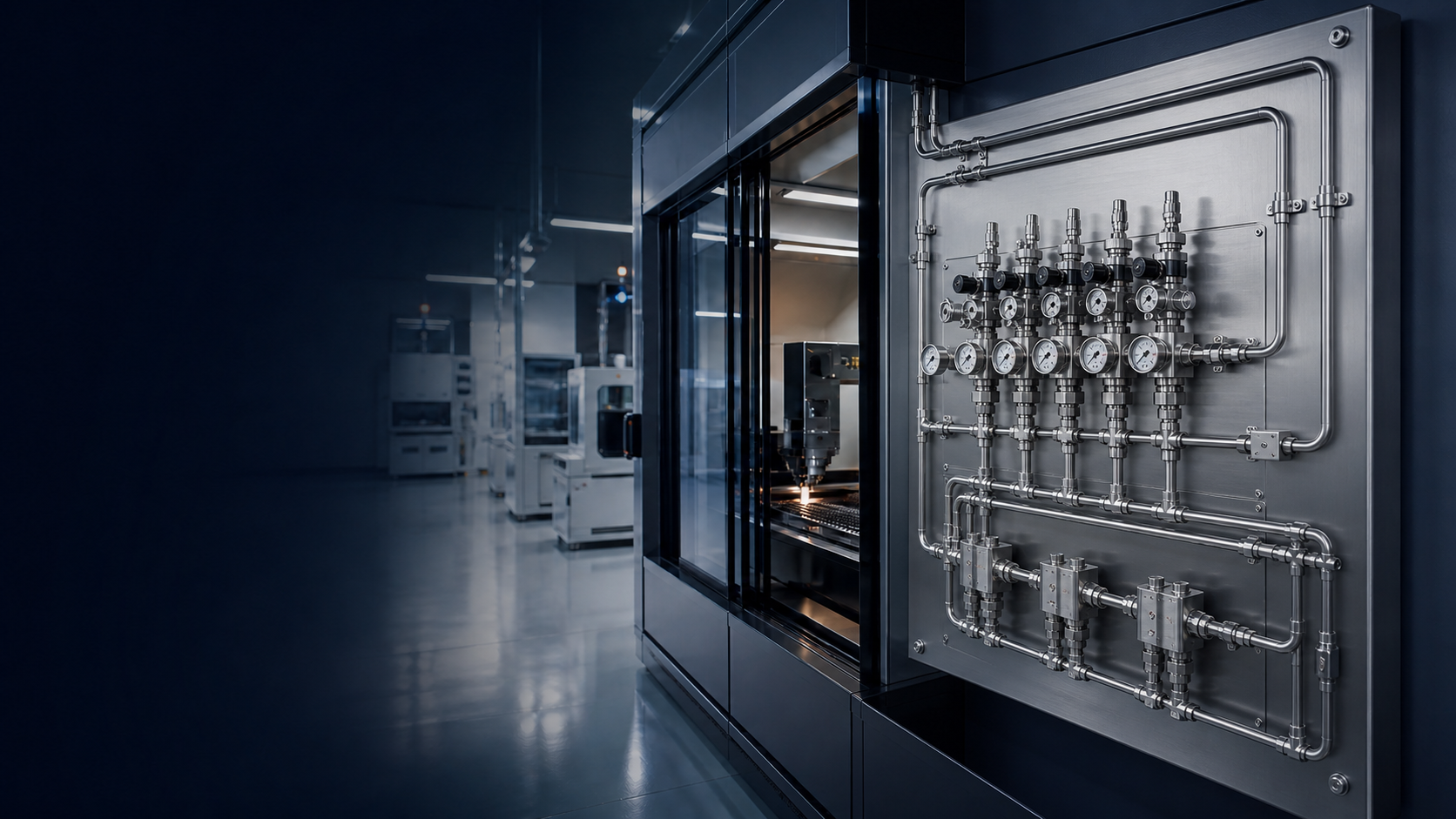
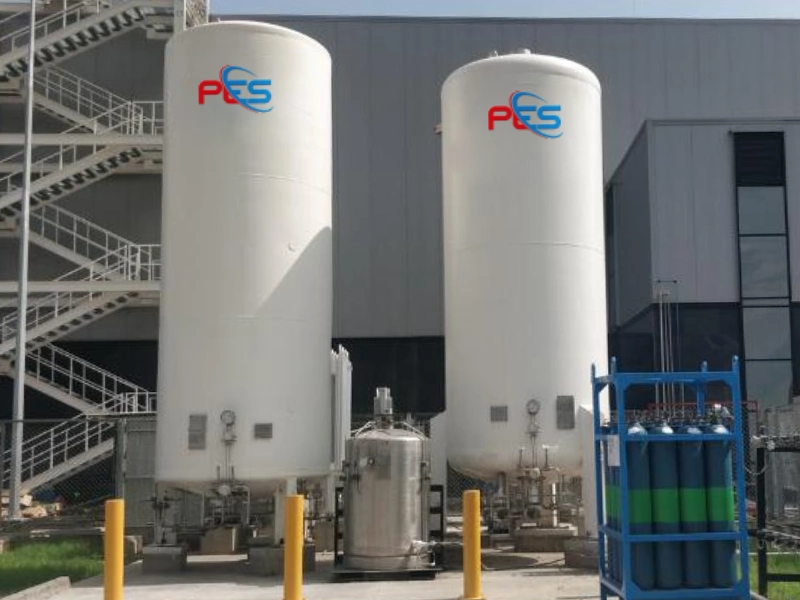
Specialty gas systems
Laboratory gas systems
High-purity gas systems
Industrial gas distribution
Gas manifolds
Gas panels
Process gas systems
Point-of-use gas supply
Analytical gas systems
Research and development
Double-stage gas regulators may be configured for a variety of gases depending on regulator materials, pressure requirements and cleanliness specifications. Gas compatibility depends on body materials, wetted materials, diaphragm materials, seals, seat materials, pressure conditions and cleanliness requirements. Compatibility must always be verified for the specific regulator and gas service.
Inert and process supply where material compatibility is confirmed for the service.
Requires materials, cleanliness and procedures appropriate to oxygen service. Confirm before selection.
Welding, fabrication and process supply as specified for the application.
Specialty and process service where the regulator construction matches the gas.
Fuel and process service only where the construction is verified for hydrogen.
Process and utility supply according to pressure, phase and material constraints.
Mixture and high-purity services as defined by the gas specification and cleanliness requirement.
For oxygen applications, suitable materials, cleaning and oxygen-service procedures may be required. One regulator configuration is not automatically compatible with all gases.
Values below are configuration dependent. Exact ratings come from the applicable regulator model and manufacturer datasheet, not from this page.
| Specification | Requirement / configuration |
|---|---|
| Product Type | Double Stage Gas Regulator |
| Regulation Method | Two successive pressure-reduction stages |
| Gas Service | Application specific |
| Maximum Inlet Pressure | Configuration specific |
| Outlet Pressure Range | Configuration specific |
| Flow Capacity | Configuration specific |
| Body Material | Configuration specific |
| Wetted Materials | Configuration specific |
| Diaphragm Material | Configuration specific |
| Seat Material | Configuration specific |
| Inlet Connection | Configuration specific |
| Outlet Connection | Configuration specific |
| Pressure Gauge | Optional / configuration specific |
| Temperature Range | Configuration specific |
| Installation | Cylinder / manifold / panel / point-of-use |
Double-stage regulator material selection depends on gas compatibility, operating pressure, temperature, purity requirements, corrosion resistance, installation environment and required service conditions.
Potential construction materials may include stainless steel, brass, application-specific alloys, and compatible diaphragm, seat and sealing materials. A given material is not always suitable for a given gas; compatibility is verified against the service.
Exact connections and installation configurations depend on gas service, regulator specification and project requirements. Thread standards and dimensions are taken from the project specification, not listed as a default here.
Mounted at the cylinder valve where a cylinder-source arrangement is specified.
Installed on or immediately after a source manifold.
Fixed in a gas panel or enclosure where the assembly requires it.
Located close to the consuming equipment.
Tube ends matched to the downstream tubing specification.
Threaded ports selected to the pipe or adaptor arrangement in the project.
Determine the gas type and compatibility requirements.
Identify normal and maximum upstream pressure.
Define the required downstream operating pressure.
Establish normal and peak gas consumption.
Determine how important maintaining consistent downstream pressure is to the application.
Choose regulator materials appropriate to the gas and environment.
Match regulator connections to the upstream and downstream system.
Consider manifolds, valves, gauges, pipelines, gas panels and downstream equipment.
Available configurations depend on gas service and project requirements. The list below describes common industrial arrangements; it is not a claim that every configuration is stocked or manufactured by PES for every gas.
01 Cylinder-mounted double-stage regulator
02 Manifold-mounted double-stage regulator
03 Panel-mounted double-stage regulator
04 Point-of-use double-stage regulator
05 Stainless-steel double-stage regulator
06 Brass double-stage regulator
07 Gauge-equipped configuration
08 High-purity configuration
Double-stage regulator selection should consider the complete gas distribution system rather than treating the regulator as an isolated component. PES can integrate pressure regulation with manifolds, valves, instrumentation, pipelines, gas panels and point-of-use equipment.
01
02
03
04
05
06
07
Reliable regulator operation depends on correct gas compatibility, correct inlet-pressure selection, correct outlet-pressure selection, appropriate flow sizing, suitable construction materials, correct connections, appropriate installation, inspection, maintenance according to manufacturer requirements, and compliance with applicable project specifications.
This page does not claim a certification, leak-tightness guarantee, or maintenance-free service. Testing and documentation are included according to project scope.
A double-stage gas regulator reduces inlet pressure through two successive pressure-reduction stages before delivering gas at the required downstream pressure.
Two-stage regulation can provide improved outlet-pressure stability and reduce the influence of changing inlet pressure.
A single-stage regulator performs pressure reduction through one primary stage. A double-stage regulator divides pressure reduction across two successive stages.
No. The appropriate configuration depends on the gas, inlet pressure, outlet pressure, flow demand, pressure-stability requirements and application.
Some configurations are designed for high-pressure cylinder supply. The regulator's rated inlet pressure and gas compatibility must be verified.
Compatibility must be verified for each gas based on regulator materials, seals, seat materials, pressure and cleanliness requirements.
Double-stage regulation may be preferred where maintaining stable downstream pressure is particularly important or where upstream cylinder pressure changes significantly during use.
Required information typically includes gas type, maximum inlet pressure, required outlet pressure, flow, temperature, purity requirements, connection type and installation configuration.
Links open published PES pages. High-pressure, high-flow and line types that do not yet have a dedicated product page open the Gas Regulators or Pressure Control family pages.
One primary reduction stage for general industrial, cylinder and point-of-use supply.
View pageSpecified where the source pressure requires a high-inlet configuration.
View pageSelected to the flow demand of the downstream system.
View pageSecondary pressure reduction within distribution pipelines, panels and branches.
View pageLocal pressure control close to process equipment.
View pageSource manifolds and changeover arrangements upstream of regulation.
View pageCylinder-bank and source management ahead of the regulator.
View pageRegulators assembled with isolation, filtration and monitoring as specified.
View pageInlet, intermediate or outlet indication as specified with the regulator.
View pageIsolation and flow control around the regulator.
View pageShare your gas type, inlet pressure, required outlet pressure, flow requirement and connection details with the engineering team.